
$$$$
MapThe George
A riverside boutique hotel opposite Hagley Park, with its own romance package for couples.
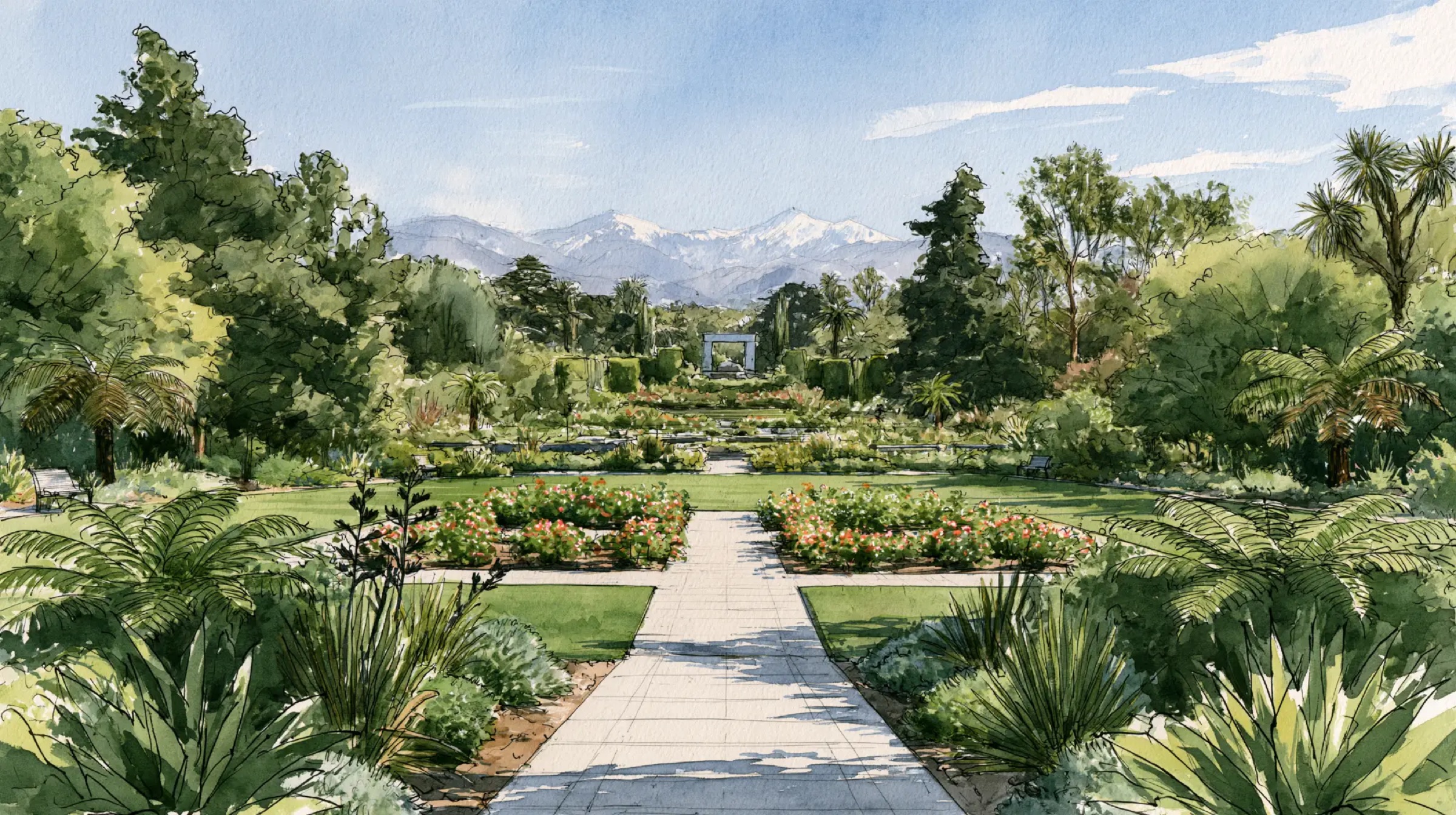
Christchurch is New Zealand’s South Island gateway, a city that has spent the years since the 2011 earthquake rebuilding itself into a mix of striking new architecture and carefully restored heritage. It has long carried the nickname “the Garden City,” and that holds up: the 52-acre Botanic Gardens sit right against Hagley Park, and punting on the Avon River, guided by a costumed punter with a pole, is still one of the most-recommended things to do in town. The restored Cathedral Square anchors the center, the heritage tram loops through the CBD, and the Christchurch Gondola climbs the Port Hills for a panoramic view over the city, Lyttelton, and the Canterbury Plains. From here, the TranzAlpine train line runs west across Arthur’s Pass to the coast, and day trips to the French-heritage harbour town of Akaroa or the port town of Lyttelton are both well within reach.
New Zealand’s seasons run opposite the Northern Hemisphere’s, so plan around that rather than the calendar you’re used to. Summer (December to February) is warmest and busiest, with long daylight hours and highs in the mid-20s Celsius. Winter (June to August) is cold and quiet, with snow dusting the Port Hills. The shoulder seasons, spring (September to November) and autumn (March to May), tend to get recommended most often: the gardens are at their best, the weather is still mild, and both crowds and prices are lower than summer’s peak.
Christchurch’s compact, flat center is easy to walk or cycle, and the heritage tram doubles as a hop-on, hop-off loop past the main sights. Metro buses cover the rest of the city, and you can simply tap a bank card or phone to ride. From the airport, buses and taxis reach the center in well under an hour. For day trips farther afield, such as Akaroa, a rental car or an organized tour gives you the most flexibility.
Hotel guides
Real hotels, sorted by who they actually suit.
$$$$
MapA riverside boutique hotel opposite Hagley Park, with its own romance package for couples.
$$$
MapSet on 5 acres of gardens across from Hagley Park, with a heated pool and babysitting on request.
$$$
MapSits right on Cathedral Square; kids stay free and eat breakfast free.