Japan's New Tax-Free Shopping Rules: How to Get Your Refund
From 1 November 2026, tourists in Japan pay the tax at the register and get it back after leaving. The steps, how to set up Visit Japan Web, and what changes in practice.
On 1 November 2026, Japan changed how tourists get the consumption tax back on shopping. You used to skip the 10 percent at the register. Now you pay it and get it refunded after you leave the country. Here’s how the process works, how to set up Visit Japan Web, and what to do differently from before.
What changed on 1 November 2026
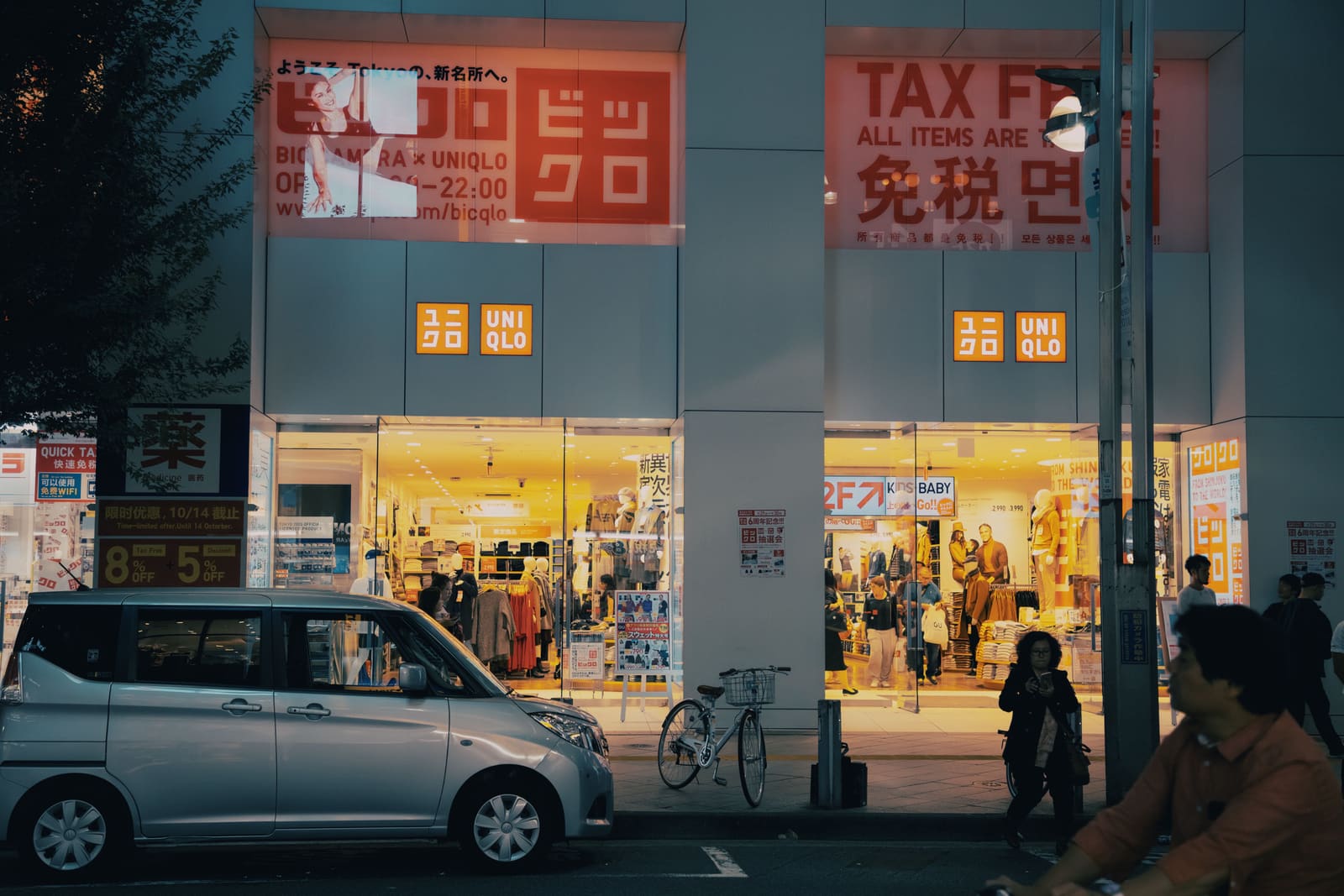
Until 31 October 2026, tourists bought tax-free goods without paying the 10 percent consumption tax at the register. From 1 November 2026, the shop charges the full price including tax, and you get the tax back after you leave Japan. There’s no overlap period, according to the National Tax Agency’s leaflet, and shops that didn’t register for the new system by 31 October lose their tax-free status, so ask before you buy. JNTO’s guide walks through the same steps.
The steps
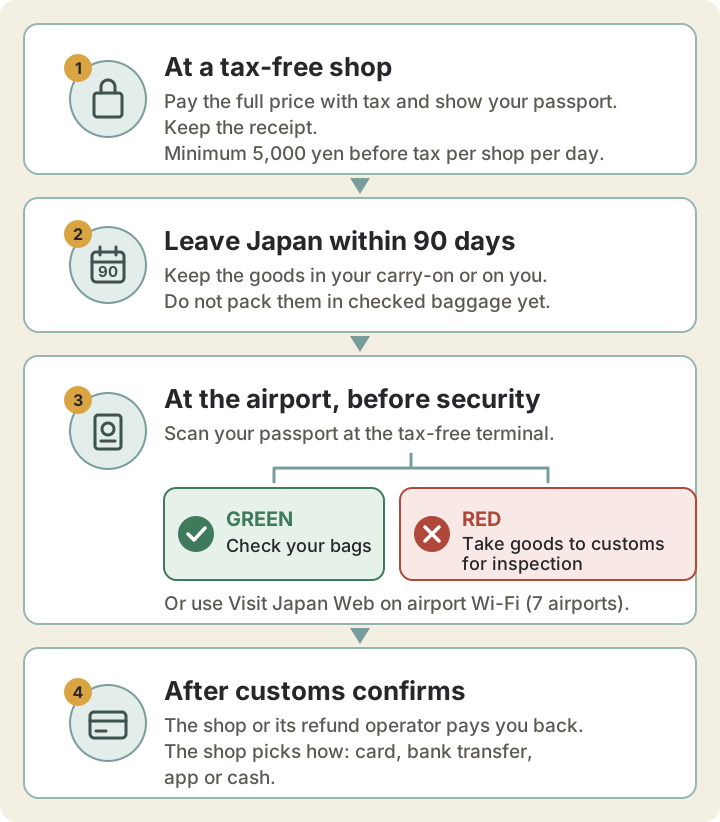
- At a tax-free shop, show your passport and pay the full price including tax. Choose how you want the refund paid, such as to a credit card, and keep the receipt.
- Keep the goods with you. You need to leave Japan within 90 days of the purchase, and you must show the goods to customs before you check your bags.
- At the departure airport, scan your passport at a tax-free terminal in the international departure lobby, before security. A green result means you can go through. A red one means you take the goods to a customs inspection area. At Narita, Haneda, Kansai, Chubu, New Chitose, Fukuoka and Naha, the Customs online procedure page says you can complete the procedure on your smartphone through Visit Japan Web instead of using the terminal, over the dedicated Wi-Fi on the international departure floor. Set up your Visit Japan Web account before you get to the airport, since the Customs page says you need it ready to use. Customs’ procedure details page lays out the same sequence and says to do this at the airport or seaport you finally leave Japan from. The site taxfree.jp, run by USP Japan under the supervision of the Japan Shopping Tourism Organization, lists where the terminals are at each airport and seaport.
- After customs confirms the goods have left, the shop or its refund operator pays you back. The shop chooses the methods, and examples include bank transfer, credit card, an app, or cash at the airport. According to taxfree.jp, cash refunds are currently available only at the major airports and Kobe Airport, which we couldn’t confirm on the Customs page.
Setting up Visit Japan Web
Visit Japan Web is the government’s free site for immigration, customs and tax-free procedures, and it also makes the tax-free shopping code that some shops scan. The Digital Agency’s guide starts with an account, which only needs an email address. You then register your passport, either by scanning it with your phone camera or by typing the details in. A passport that expires within six months gets a warning, and the guide says passport information is required for the tax-free features. You can also add your entry date and where you’ll stay.
The tax-free code works a little differently. The guide says your passport has to be scanned first, including the landing permit stamp, so that part probably has to wait until you’ve arrived in Japan. Only foreign visitors with temporary visitor status can use it. At a shop you show the code, and a screenshot won’t work. The Japan Tourism Agency also says not all tax-free shops accept it, so ask before you rely on it. If a shop doesn’t take the code, you show your passport as usual.
The rules
You need to spend at least 5,000 yen before tax at one shop on one day. The old split between general goods and consumables, the 500,000 yen cap on consumables and the sealed bag are gone. If one item on a receipt isn’t with you, none of that receipt’s items qualify. Items you’ve used or consumed in Japan don’t qualify, and used items need to be shown to a customs officer. Gold and platinum bullion and coins are excluded.
What it changes in practice
You now pay the tax up front and wait for the refund. One travel site reported card refunds taking one to two weeks and bank transfers two to four weeks, but that isn’t from a government source.
Tax-free goods go in your carry-on or stay on you until customs has seen them, so don’t pack them in a checked bag. Arrive at the airport earlier than you used to, since the step comes before bag drop and a red result adds time. Keep each receipt’s goods together and unopened, and don’t hand a gift to someone before you fly if it’s on that receipt. If you fly domestically before leaving Japan, do the customs step at the airport you actually leave Japan from.
Ask the shop how it pays refunds, and whether there’s a fee. We couldn’t find a government fee schedule.
A separate change: Tokyo’s accommodation tax
Tokyo’s accommodation tax is a different rule from tax-free shopping. Until 31 March 2027 it’s still the fixed rate: nothing under 10,000 yen per person per night, 100 yen from 10,000 to under 15,000 yen, and 200 yen above. From 1 April 2027 it becomes 3 percent of the room rate per person per night, with stays under 13,000 yen not taxed, according to the Tokyo Bureau of Taxation, so none of your December to March stays are affected.