$
MapcitizenM Los Angeles Downtown
Compact design-led rooms downtown, about five minutes from Historic Broadway Metro.
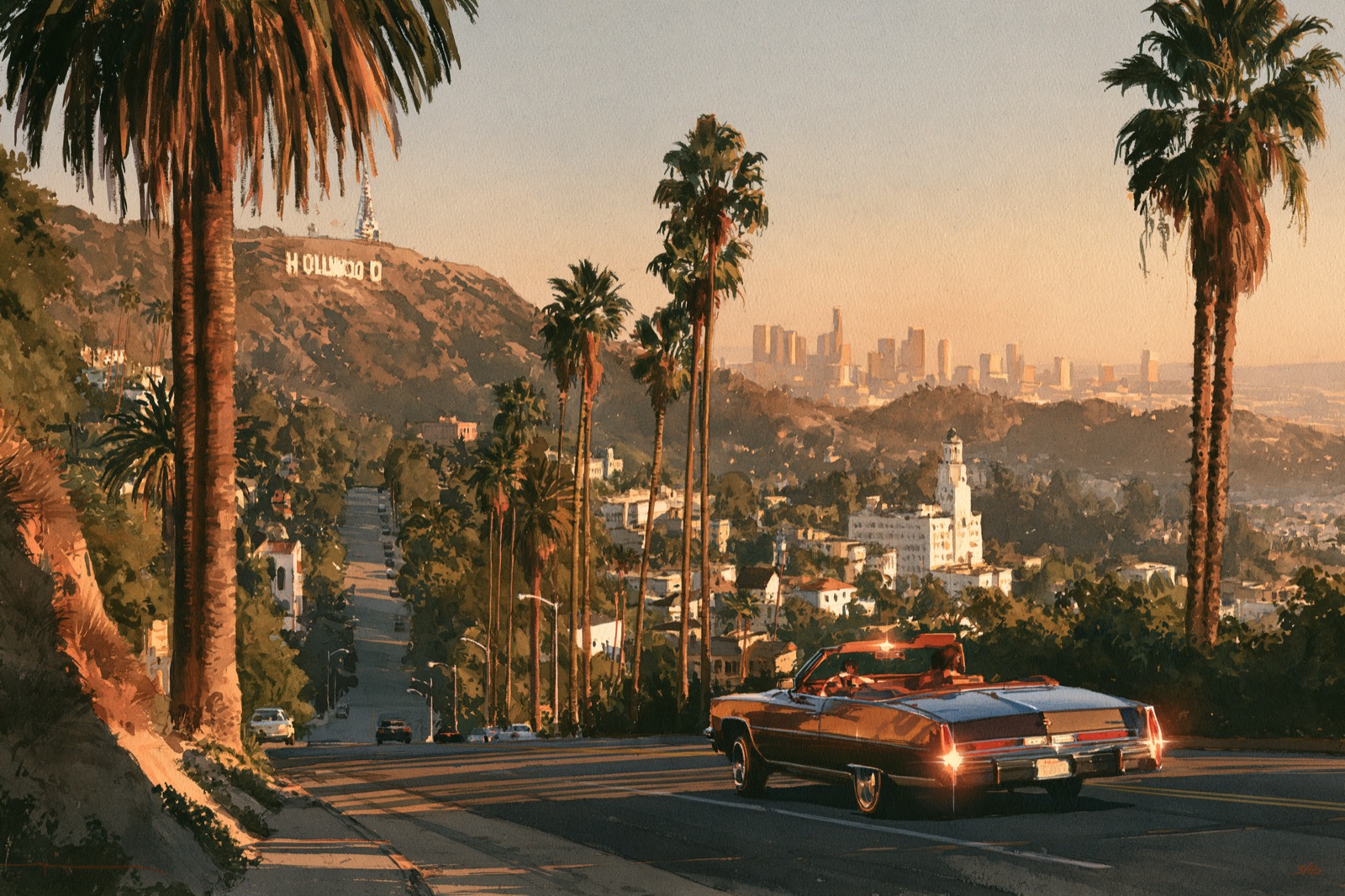
Los Angeles is less a single city than a string of very different ones stitched together by freeways: the surf-and-boardwalk stretch of the coast, the studio backlots and hillside sign of Hollywood, the downtown skyline, and dozens of neighborhoods in between, each with its own pace and look. It’s a car-first, spread-out city built around outdoor life. Beaches, hiking trails, and rooftop patios do as much of the socializing as any restaurant or bar.
Weather is mild and mostly dry nearly year-round, which is part of the appeal, but it isn’t uniform. Late spring and early summer bring “June Gloom,” a marine layer that keeps mornings overcast along the coast even when inland neighborhoods are sunny. September and October tend to be the warmest, clearest stretch, with thinner crowds than summer. Winter (December through February) is the mildest rainy season, still comparatively warm by most standards, with occasional storms rather than sustained rain.
Los Angeles is spread out and built around the car, so most visitors mix driving or Uber and Lyft with Metro rail and buses. The Metro network keeps growing: the D Line now runs along Wilshire Boulevard, and the rail lines reach Downtown, Hollywood, Santa Monica and Long Beach. Santa Monica and Venice are easy to explore by bike along the beach path. From LAX, a free shuttle links the terminals to the Metro Transit Center, and the FlyAway bus runs direct to Union Station downtown.
Neighborhood guides
Every guide below covers one area, hotel by hotel, with the day picture and the after-dark picture kept separate.
This article contains affiliate links. If you book through one, we may earn a commission at no extra cost to you.
$
MapCompact design-led rooms downtown, about five minutes from Historic Broadway Metro.
$
MapAt Hollywood and Highland, about three minutes from the Metro B Line station.
$$$$
MapA resort on five acres by Palisades Park, two short blocks from Third Street Promenade.
$$$
MapDirectly across Ocean Avenue from the beach, a few minutes' walk from the Pier.
$$
MapA quiet residential corner a block off Third Street Promenade, good for longer family stays.
